The Varroa Mite Resistance Crisis: Why Beekeepers Across America Are Losing the Fight
If you ask any commercial beekeeper what keeps them up at night, the answer is almost always the same: varroa mites. Varroa destructor — a parasitic mite that feeds on developing bee larvae and transmits a cocktail of deadly viruses — has been the dominant cause of colony loss in the United States since it arrived from Asia in the late 1980s.
For decades, beekeepers managed varroa with a rotating arsenal of chemical treatments: oxalic acid, amitraz, fluvalinate, and others. The strategy worked — imperfectly, but well enough to keep colonies alive. In 2025, that strategy started breaking down in ways that have the beekeeping community deeply worried.
What Resistance Means in Practice
Resistance develops when a small percentage of mites survive a chemical treatment and pass that survival trait to their offspring. Over multiple treatment cycles, the resistant population grows until the treatment becomes ineffective. This is the same process that has made antibiotic-resistant bacteria a public health crisis — and it's now playing out in varroa populations across the country.
University extension programs in several states reported in 2025 that amitraz — long considered the most reliable varroa treatment — was showing significantly reduced efficacy in field trials. Beekeepers who had used the same treatment protocol for years were finding mite counts barely moving after application. Colonies that should have been protected were collapsing anyway.
The Southeastern United States Is a Hot Spot
Resistance tends to develop faster in warm climates because varroa reproduces year-round when colonies don't have a broodless winter period. In Tennessee, Mississippi, and Arkansas, colonies rarely go fully broodless — which means mites never stop reproducing, and treatment windows are shorter and less effective than in northern states.
This is one reason Mid-South beekeepers have been hit disproportionately hard. The same mild winters that make the region attractive for beekeeping also accelerate the resistance timeline.
What Researchers Are Doing About It
The response from the research community has been significant. USDA's Beltsville Bee Research Laboratory and several university programs are pursuing multiple parallel tracks. Selective breeding for hygienic behavior — the ability of worker bees to detect and remove mite-infested larvae before the mites can reproduce — has shown real promise. Colonies bred for high hygienic behavior can suppress mite populations without chemical intervention.
Biotechnology approaches are also advancing. RNA interference treatments that target varroa-specific genes without harming bees have moved from laboratory proof-of-concept to small-scale field trials. These treatments are still years from commercial availability, but the science is solid.
In the meantime, integrated pest management — combining multiple treatment methods, monitoring mite loads regularly, and timing treatments precisely — remains the best available strategy for keeping colonies alive.
What This Means for Wild and Feral Colonies
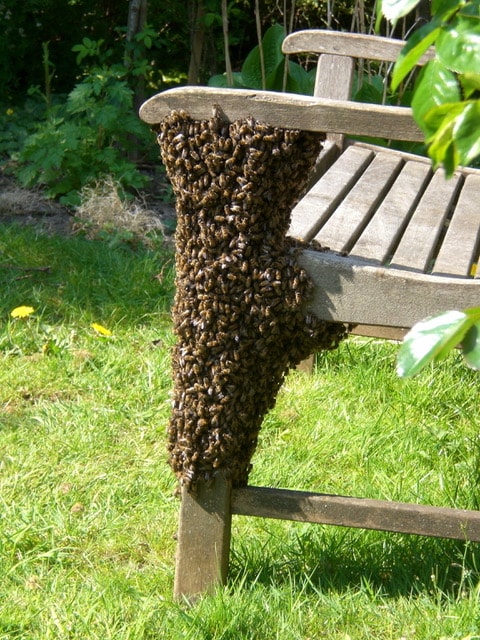
Feral honeybee colonies — the ones living in tree hollows, wall voids, and attic spaces — are not treated for varroa. They survive on their own, which means the ones that are still alive have likely developed some degree of natural resistance or tolerance. From a genetic standpoint, these colonies are extraordinarily valuable.
When we remove a feral colony from a structure in Memphis or the surrounding area, we're not just solving a homeowner's problem. We're potentially preserving genetics that could contribute to the development of varroa-resistant breeding lines. That's one more reason live removal is always worth it.