What to Expect During a Structural Bee Cutout
A structural cutout is the most involved type of bee removal — and the most misunderstood. Homeowners often worry about the damage, the cost, and whether the bees will come back. Here's exactly what the process looks like when you call Bees Knees Apiary.
Step 1: Inspection and Assessment
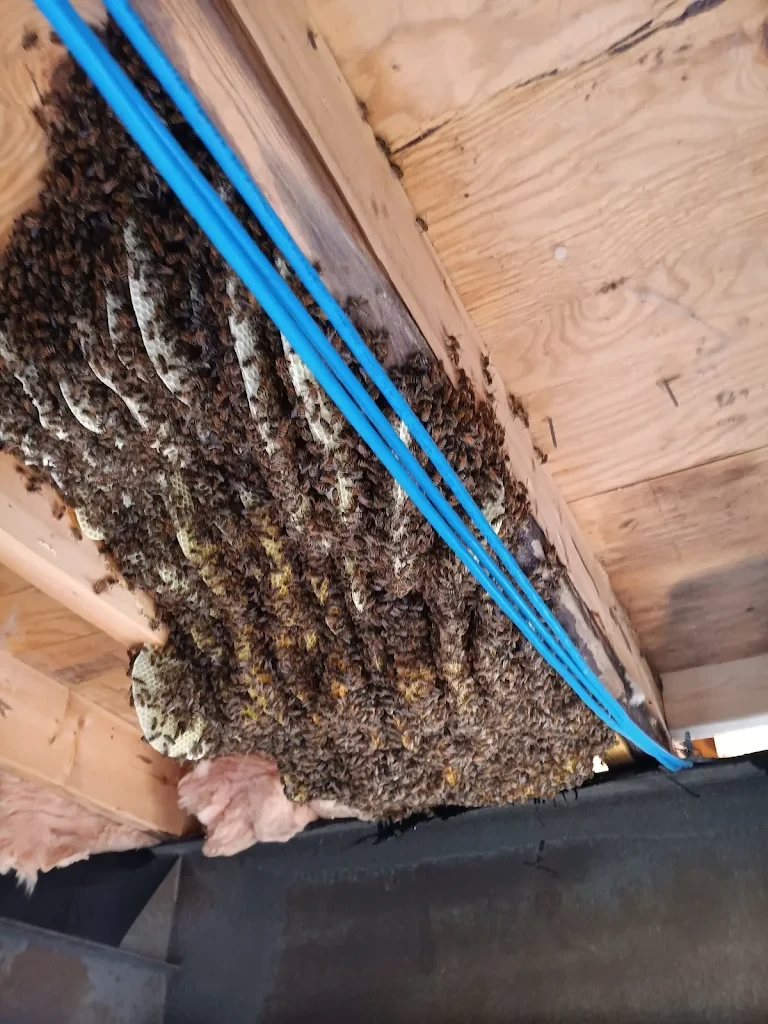
Before any tools come out, we inspect the exterior and interior of your home to locate the colony. We look for the entry point, listen for buzzing inside walls, and assess how long the colony has been established. A colony that's been in place for one season is very different from one that's been there for five years.
Step 2: Opening the Structure
We make a precise cut — as small as possible — to access the colony. We work with the structure of your home, cutting along studs and joists to minimize damage and make repair straightforward. We protect your floors and furniture before we start.
Step 3: Removing the Bees and Comb
Every frame of comb is removed by hand. We use a bee vacuum to collect the bees alive — they go into a transport box and ultimately to our apiary. We remove all honey, wax, and brood. Leaving any of it behind invites future infestations and causes structural damage as it melts and ferments.
Step 4: Cleaning the Cavity
Once the comb is out, we clean the void thoroughly. Any residual wax or honey is scraped and removed. We treat the area to eliminate pheromone traces that attract future colonies.
Step 5: Sealing and Repair
We seal every entry point permanently — not just the main entrance, but every gap, crack, and void the bees could use. We patch the opening we made and leave your home cleaner than we found it.
Will the Bees Come Back?
Not if the job is done right. The key is removing all the comb and sealing all the entry points. A partial removal — or a spray job that leaves the comb in place — guarantees a return visit. We do it once, we do it right.